The AI Agents Will Transform Microsoft Dynamics 365 Business Central
Chapter 1 of 6
The End of ERP Navigation: Why Business Central Is About to Change
For nearly three decades, ERP projects have pursued a familiar objective:
teaching people how to use the system.
We trained users.
We created manuals.
We documented procedures.
We delivered countless workshops and adoption sessions.
And all of that effort was ultimately focused on one thing:
Learning how to navigate.
Learning where information is stored.
Learning which page to open.
Learning which process to execute.
Learning which button to click.
For years, this made perfect sense.
But today, a question emerges that could fundamentally change how we think about ERP systems:
What if users no longer needed to learn how to navigate the ERP?
For Thirty Years We Built ERP Around Navigation
When a user needs information in Business Central, they typically need to know:
- Where the data resides.
- Which page contains the information.
- Which permissions are required.
- Which filters must be applied.
- Which report provides the answer.
Even relatively simple business questions often require a significant level of system knowledge.
A finance professional may fully understand the business process.
A purchasing manager may deeply understand supplier performance.
An operations manager may know exactly which decisions need to be taken.
Yet all of them still depend on understanding how to navigate the system.
For decades, we accepted this as normal.
Perhaps we are approaching a point where it no longer has to be.
The Problem Was Never Business Knowledge
Let us take a step back.
Most business leaders already know which questions matter.
The challenge is rarely identifying the right question.
The challenge is obtaining the answer.
A Finance Director may want to understand cash exposure.
A Purchasing Manager may need to identify supply chain risks.
A Chief Executive may need visibility into emerging operational issues.
The business knowledge already exists.
The difficulty lies in accessing and connecting the information required to support decisions.
This is where AI Agents begin to change the equation.
We Are Not Changing the Interface
We Are Changing the Mental Model
For years, ERP interaction followed a predictable sequence:
User -> Screen -> Process -> Result
To obtain answers, users needed to move through the entire chain.
AI Agents introduce a fundamentally different model:
User -> Intent -> Result
At first glance, this may appear to be a minor change.
It is not.
It could become the most significant shift in ERP interaction since the introduction of modern graphical user interfaces.
The system no longer begins with navigation.
It begins with intent.
Practical Business Scenario 1
The Finance Director and Credit Risk
Imagine a Monday morning executive meeting.
The Finance Director is asked:
«What is our biggest credit risk over the next thirty days?»
Today, answering that question often requires:
- reviewing customer ledgers;
- analysing overdue balances;
- checking payment histories;
- evaluating exposure levels;
- consolidating multiple reports.
The information is available.
The process is time-consuming.
Now imagine a different scenario.
The Finance Director asks:
«Which customers represent 80% of our projected credit risk during the next thirty days, and how does this compare with the previous quarter?»
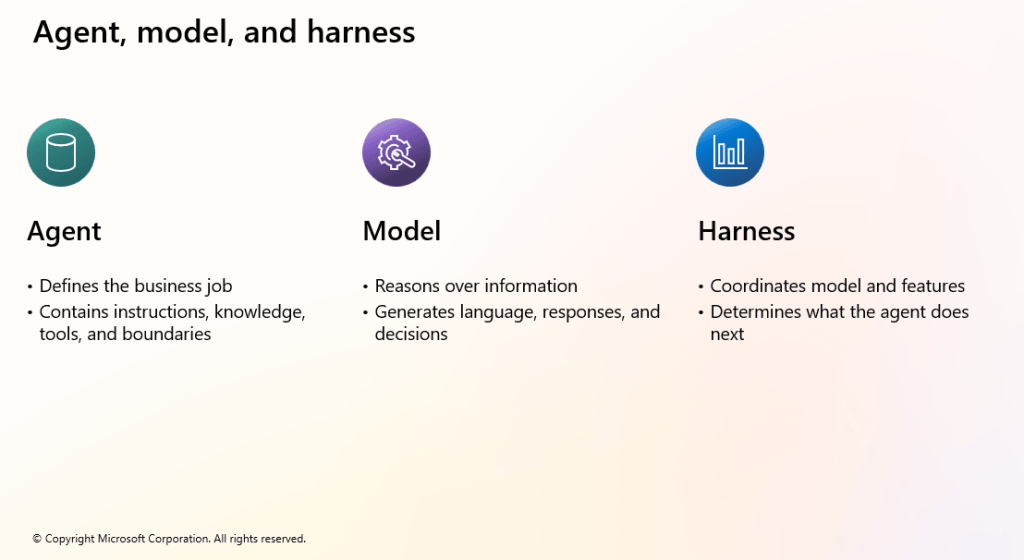
The Agent:
- retrieves customer data;
- analyses open balances;
- reviews payment behaviour;
- identifies relevant trends;
- highlights priority risks.
The Finance Director still owns the decision.
The Agent simply removes the effort required to assemble the information.
The important question is not technological.
The important question is strategic:
How much time do organisations spend collecting information instead of making decisions?
Practical Business Scenario 2
The Purchasing Manager and Stock Shortages
Consider a Purchasing Manager responsible for maintaining product availability.
Today, identifying future shortages may involve reviewing:
- inventory levels;
- planning worksheets;
- purchase orders;
- supplier lead times;
- demand forecasts.
None of these activities are especially difficult.
However, they require time, navigation and interpretation.
Now imagine the following question:
«Which products are at risk of stock shortages before the end of the month?»
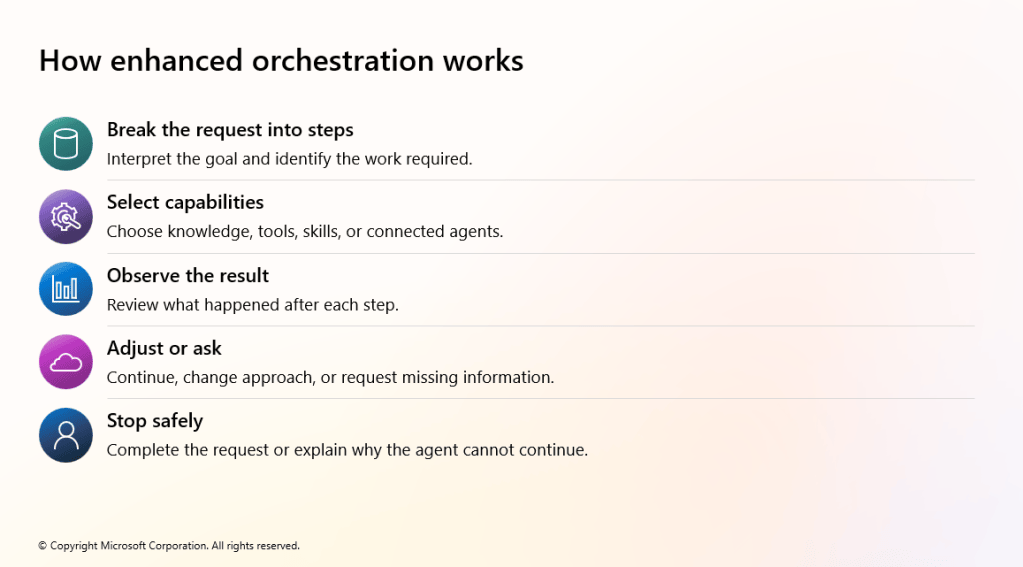
An Agent could:
- identify vulnerable products;
- analyse incoming purchase orders;
- review supplier commitments;
- estimate potential shortages;
- propose corrective actions.
The business value is not simply faster reporting.
The business value is earlier action.
And in many organisations, earlier action is the difference between preventing a problem and explaining it afterwards.
Practical Business Scenario 3
The CEO Who Never Wanted to Use an ERP
Let us be honest.
Many executives use ERP systems because they need information.
Not because they enjoy navigating software.
Most senior leaders do not want to learn transactions, reports and system structures.
They want answers.
Imagine a CEO asking:
«What are the three most significant operational risks we should review this week?»
To answer correctly, the Agent might need to evaluate:
- financial indicators;
- purchasing activities;
- sales performance;
- operational exceptions;
- service-related issues.
This goes far beyond automation.
This is about interpretation.
This is about context.
This is about transforming organisational knowledge into business intelligence.
And that may be where the greatest opportunity lies.
What Is Really Going to Change?
When professionals discuss AI Agents, the conversation often revolves around technology.
I believe the most significant change will be organisational.
For decades, organisations optimised systems so that people could learn how to use applications.
We are now entering an era where applications begin learning how organisations operate.
That shift changes where value is created.
Less importance on:
- navigation;
- menus;
- transactions;
- locating information.
More importance on:
- business rules;
- organisational knowledge;
- governance;
- trusted data;
- decision frameworks.
The conversation moves away from software usage.
It moves towards business understanding.
What Does This Mean for Functional Consultants?
This may be the most important question of all.
For years, functional consultants have acted as translators between business and technology.
We translated:
- business requirements;
- processes;
- objectives;
- policies;
into system behaviour and ERP configurations.
AI Agents do not eliminate that responsibility.
They amplify it.
Someone still needs to define:
- which knowledge should be trusted;
- which recommendations are appropriate;
- which actions may be executed;
- which governance rules apply;
- which business logic should guide decisions.
The role of the functional consultant does not become less important.
It becomes more strategic.
Less time spent explaining where to click.
More time spent teaching intelligent systems how the business truly operates.
And that may ultimately increase the strategic value of functional consulting more than any previous technology shift.
To Conclude
For decades, organisations taught people how to understand ERP systems.
The next decade may be about teaching ERP systems how to understand people.
The most significant transformation may not be technological.
It may be conceptual.
Because the future may not be about using Business Central more efficiently.
It may be about collaborating with Business Central more intelligently.
And when that happens, competitive advantage will no longer belong to those who know the most screens.
It will belong to those who understand the business best.
Coming Next…
Chapter 2 of 6
The Finance Agent
Imagine beginning every morning with a conversation rather than a collection of reports.
- Credit risk.
- Cash flow exposure.
- Payment trends.
- Profitability deviations.
- Financial alerts.
All prioritised.
All contextualised.
All available through a single interaction.
Are we approaching a future where financial decisions begin with a conversation?
Could a Finance Agent become the first truly specialised digital colleague within Microsoft Dynamics 365 Business Central?
Next week, we explore a scenario that may be much closer than many organisations realise.

Deja una respuesta