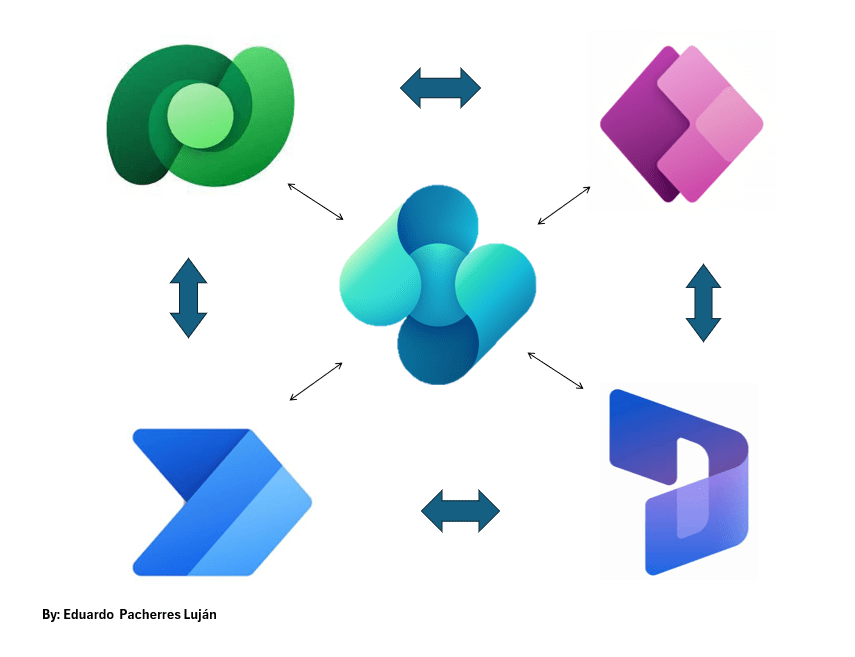
The integration between Business Central and Dataverse has always been a strategic pillar within the Dynamics ecosystem. It connects the ERP with Power Apps, Power Automate and Dynamics 365, shaping how information flows across processes, teams and business applications.
Recent improvements introduce a more refined approach to data consistency, integration stability and architectural clarity. These changes are not loud or flashy, but they make a meaningful difference for those of us who design, implement and govern enterprise solutions.
1. Clearer and more predictable field mapping
One of the most valuable enhancements is the expansion and reorganisation of field mapping between Business Central and Dataverse. This results in:
- less ambiguity when synchronising entities
- fewer unnecessary customisations
- reduced risk of inconsistencies
- better alignment with the Dynamics 365 data model
For architects and consultants, this translates into something very simple: less friction and more control.
When the data model is clearer, integrations become more stable and design decisions more predictable.
2. More consistent synchronisation across platforms
The synchronisation logic has been refined to better handle key fields, especially those related to:
- contacts
- accounts
- addresses
- commercial information
- entity relationships
This addresses one of the most common challenges in hybrid projects: data divergence between systems that should remain aligned.
When Dataverse and Business Central speak the same language, the entire architecture becomes more robust.
3. A step towards a unified architecture
Although these changes are subtle, they are undeniably strategic.
Microsoft continues to move Business Central towards a more natural integration with:
- Power Apps
- Power Automate
- Dynamics 365 Sales
- Dynamics 365 Customer Service
- Custom applications built on Dataverse
Every improvement in mapping and synchronisation is another building block in that unified architecture.
For solution designers, this means:
- fewer ad hoc connectors
- fewer manual transformations
- fewer fragile dependencies
- more standardisation
And ultimately, a stronger foundation for scalable, long‑term solutions.
4. Real impact on projects: less customisation, more stability
In real-world projects, these improvements lead to:
- fewer development hours
- fewer post go‑live incidents
- fewer integration adjustments
- fewer surprises in scheduled synchronisations
- fewer “patches” to fix inconsistent data
Most importantly, they provide a more reliable base for building business applications on Dataverse without compromising ERP integrity.
5. Why these changes matter more than they seem
Because the integration between Business Central and Dataverse is not just a connector. It is the backbone of:
- mobile applications
- automation flows
- customer experiences
- hybrid processes
- low‑code solutions
- enterprise extensions
When that backbone becomes stronger, everything built on top becomes more trustworthy.
These enhancements may not be headline-grabbing, but they represent a quiet and necessary step towards a more mature integration model.
To Conclude
The recent improvements in Dataverse integration bring a cleaner, more coherent and more sustainable architecture to Business Central. For architects, consultants and integration teams, they offer an opportunity to design more stable solutions, reduce customisations and strengthen interoperability across platforms.
In an ecosystem where data flows through multiple applications, every improvement in Dataverse is an improvement in business quality.

Deja un comentario